Sunday, February 11, 2007

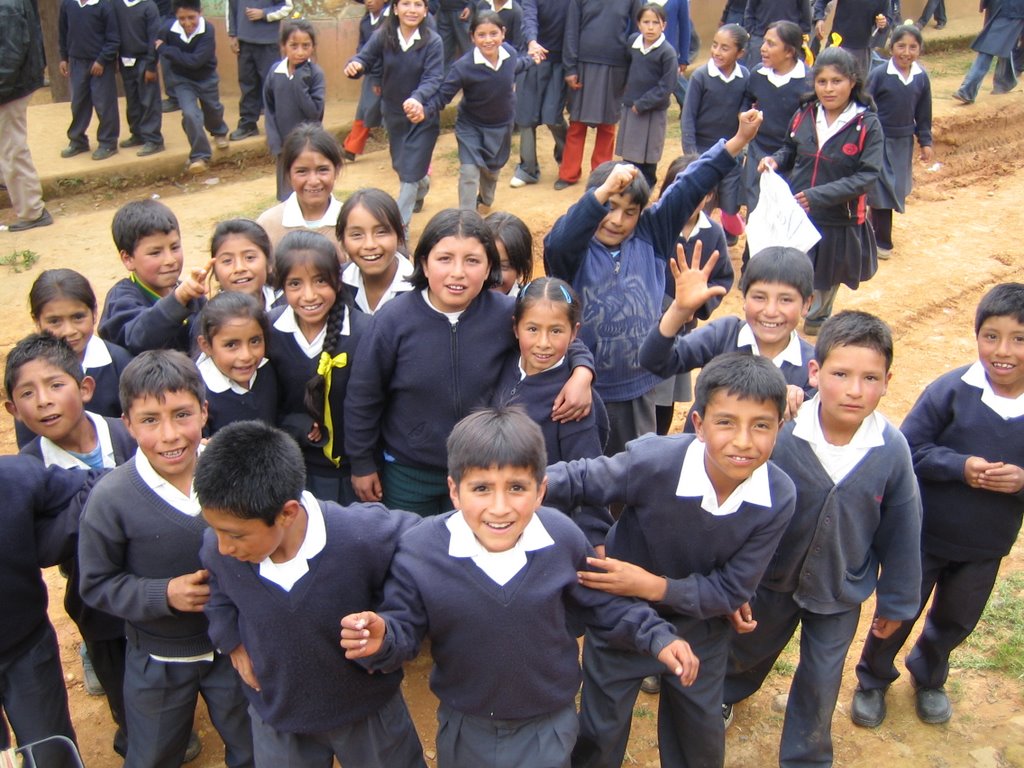
Kids that keep me going....


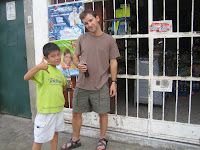
Marisol and Fernado, Jesus loving ¨smack down¨

Working Hard or Hardly Working?

As the weeks march on January turns to February. It hasn’t been a productive work month. But rather a productive thinking and planning month. We’ve meet with the mayor about our water project. Juan did his best to translate for me, for a man who’s Spanish is a about as intelligible as the sound a crumpled paper bag makes. If I understood correctly, the project has been written into the municipality’s budget. I just need to start the PC paperwork for my end of the financing. Meanwhile we await an engineer who is coming late February to assess the project cost. Tengo mis dudas sobre todo. Patience.

I’ve made it clear to my co-workers, Maria, Pilar and Juan that I’m focusing on 3 large projects this year. The aforementioned water renovation, recruiting and training local health promoters and forming a new water committee. Sure other small things will come up. But these three projects are key to the development of Carata.

As for a department in general, PCV’s from La Libertad will be holding it’s first ever Camp ALMA (soul) this year. Camp ALMA began years ago when PCV’s decided to bring together a group of young females from their communities for a leadership retreat. The goal is twofold, to transform the girls into role models and upon their return home to work in their villages as agents of change. Ideally, they would maintain the sustainability of the camp by leading others into service, good will and civic involvement.


My health in general has been very good. Mentally and physically. I´m back into life in the mountains and really looking forward to a successful year. Change is so slow to happen, but the more we keep at it the better the future looks! Thank you to all my dependable readers. I´ve enjoyed maintaining this blog to chronicle my experience, but most of all to stay connected to the US in a major way. Un fuerte abrazo. Mateo

i´m going home

Many of the students at JSRHS asked me if I felt what could be termed culture shock upon arrival in the USA. I explained how the biggest surprises were really quite minor that I knew all along but had just forgotten about like, the plethora of hot water, a variety of foods and comfortable transportation. I went on to say that personally, I felt a stronger transition back to US culture in 2003. I had been studying Spanish in Costa Rica for 6 months and came home to begin college courses in Boston. I remember vividly the first couple of days.

The tremdous height of American men and women. The fact that English dominated every street sign, billboard and radiated from crowds. The cereal isle at the grocery store easily contained 75 brands of cereal! I wondered, is it really necessary for us to have that much variety?Nevertheless, I reintegrated and began back at the university. This recent trip was a flawless integration as long as I could remember to throw toilet paper down the bowl instead of in the nearby trash can!

What I never anticipated would frighten me the most. Going back to Perú. Call it reverse-reverse culture shock. Just when I thought I had been through it all-a short trip to the US disrupted everything. I immediately felt it when driving from the airport in Lima to our self nominated Peace Corps hostal-INCA HAUS. I rode with another PCV, Jane who ironically was on the same flight. We drove through an intersection in a poor part of the city and I was shocked to see small children performing acrobatics between lanes at 11:45pm. Was this really happening? I looked farther into the desolate distance at piles of burning trash in abandoned lots. By the look on Jane face, she sat quietly, obviously not thinking about the extreme poverty surrounding us. Welcome back to Peace Corps…..

I stayed in Lima a mere 24 hours to go back to the dentist and have my crown checked. That night I met up with a friend from Lima for dinner, Arturo and he dropped me off at the bus terminal for Trujillo. Juan was kind enough to meet me at 730am that next morning. He helped me with my luggage (enough for the two of us) and we went straight to la rinconada. The families neighborhood. Everyone was excited to see me, all the extended family of Juan and Mena. I unpacked gifts and gave everyone a little something from the US. We talked about Christmas and New Years. They were in a hurry to go up to Carata and although I wasn´t ( I wanted to stay in Trujillo for at least 2 nights) I decided to go with them. Big mistake.

Who knew you were supposed to ease yourself into poverty?

That first night in Carata was unforgettable. I had definitely arrived too quickly to my community without preparing myself for the reality. A tremendous homesickness came over me. I couldn’t bare to unpack my luggage because everything I brought back reminded me of Jenni, Dad, Mom, and Holly. It was horrible. I felt like abandoning my community, this job, this country and quitting to be back at home again. Saturday was an emotional day, I tried to think of the positives- but every thought was connected to home. I decided that I didn’t want to leave Perú but I wasn’t ready to get back into work. I needed a vacation or at least a break.

You see, my whole trip home was so excellent it’s hard to forget it and move on. I describe it as if I built a hard shell this past year, placing all my memories and happiness in the back of my head as a coping mechanism to adapt and overcome the challenges here. After going home I broke out of that shell, exposed myself to friends and family by opening all those hidden feelings of love and sadness, and happiness and fear and came back to Perú without thinking twice.

I think some volunteers don’t go home during their service because it’s just too hard to leave and come back.

The next 48 hours crawled by. My senses were awakened to new feelings. I smelled the familiar rain for the first time, and watched the thick fog hug the small village with new eyes. The smell of smoke that seeped through the red ceramic shingles permeated my clothes. The cackling of our neighbor´s donkey echoed into the night. The skyline of green mountains perfectly cut into rectangles glistened through the suns morning rays. This was the Carata I had forgotten, these small details of a tiny community at work.

A rush of emotions, thoughts and realities surged through my veins as I moved through the instinctual daily motions.

The California garden! Mud. The band plays. Rain. I’m not dancing. Sunshine. A pig grunts. Kids greet me. My phone, why did I leave it in Lima? Hola Cucha, How´s the fam? The unsightly trash. Our broken staircase. The key. Benito. Dogs barking. No water, again? Clear skies. My vitamins. What a sunset. Potato soup with symone. A heaping plate of white rice. One week. Where are the spices I brought back? A cold draft moves in. Comfortable, comforting bed. Camp Alma. Ann’s gone. Everythings green now. It’s a cold morning. More bread, please. 40º. 10,500 ft. I need to buy some more Listerine. Health post. Ya vengo. Maria and Pilar. Quality vs. Quantity. Last year. MINSA. ¿Como como como? No phone. The voicemail better be fixed. One week. Agua Potable. Health promoters. Water committee. New boots. Old boots. Alipio Bacilio. Smiles. Jeans. They each take turns. Jealously. T-shirts. His sons. ¿Cuanto costó? One week. Emily’s gone. Moldy rooms. Mi cuerpo no esta hecho de Madera. Chicki’s bouncing welcome. Cold shower. Vollyball. Uno. Play. Contra. We’re a good team. Flannel sheets. Agua cero. Water’s back. Lights out. 6 days later. It’s 7:30. Dinner time. La viuda de Blanco. Perú campeón. Lorca. Mana. Dina Pauker. A good novel. I forgot to floss. My bacín. One week. This would taste so much better with peanut butter. Iquitos. Holly’s visit. Huachos. Encuestas. Mr. Mayor. I can’t understand you. Jenni’s birthday. Rain drops on the tin roof. Don’t slip. Player 1. Ga-me over. More gifts. Boy cries. Donated toothbrushes and toothpaste. Meet Alex. Hop Scotch. Home made cookies. Should I coach volleyball? Washing clothes. Rent’s due. Fake like the foods great. How are Khaliah and Isaac? The door squeaks close. New wool socks. I should sweep the balcony. Make a grocery list. La hora de bajar. One week.

Late one of these past nights in January, I wrote a journal entry to myself.

“There’s something about this place that’s keeping me here. Unfinished work. There’s still too much to do. I cannot abandon this village. They have been abandoned by too many others. And so I began working again-differently this year. With specific goals in mind. I’ll try to be better to myself and not allow things/people to upset me. I have three resolutions. 1. Save more money. 2. Exercise daily. 3. Improve my Spanish.”

Sunday, January 21, 2007

Christmas was more than good- Excellent!

Going home- What a stretch since being in Peru for so long. I was excited, and nervous at the same time. I mix of emotions ran through me in the days leading up to the trip. When I finally arrived in Boston, I was greeted by my sister and best friend, Holly. In the next couple of days I saw many people, and quickly adapted to US culture. It was so convenient to have water and electricity everyday! I could have gotten used to it! And lets not forget the food! I didn't eat rice-once. Except in a sushi roll, but that doesn't count.

I even went to my old high school to give a presentation about Peace Corps and Peru. I found it difficult to share many experiences to students who have never been abroad but most were open to learning and asked intelligent questions. The school has changed a lot. Thank you John Stark, students and faculty for inviting me as a guest.

Christmas day came up quickly, we celebrated at my mom's apartment in Concord. Having the whole family together was similar and different from years past. We've learned to make new traditions. Jenni and Bill brought there dog, Bella who celebrated her first Christmas. I had brought many gifts and in return received practical gifts I could use for this next year. We ate a home made ham and relaxed. My dad, Bill and I watched "A White Christmas" and played with the dog.

I headed down to Boston for New Years to spend some time with friends, David and Josiah. Who both offered their apartments for a couple of nights. I showed them the carata video from August. I think this gave them a better perspective of life in the campo, instead of trying to imagine from photos. Joe and I rang in the new year with Dick Clark. 2006-What a year. What would 2007 bring?

Sunday, January 14, 2007

Thanksgiving 2 of 2

Wednesday Nov. 22nd

Huaraz is not quite as touristy as Cusco (where Machu Picchu is) but probably the second most next to Lima. Hikers from around the world come to trek the “Cordillera Blanca” “White mountain range”-one of the longest and highest chains of the Andes. Peaks reach heights of …..6,768 m, there are 22 hotsprings and more than 600 lakes. And a multitude of hikes to endulge yourself in, but most do the Santa Cruz or Huayhuash (pronounced Y-Wash) routes. The hikes differ in lengths and skill level. Next year in July/August a group of us are planning a 9 day trip through Huayhuash, and hiring guides and donkeys to carry our food, and gear.
To say the least I was happy to have arrived in backpacker’s heaven, especially with such a great group of friends for a couple of days of r & r. (to use an American expression). We settled into our hostel, La Colmena (the beehive) and unpacked. Some of the girls wanted to see an archeological site called Chavin, so we walked through the city to a recommended agency. The people are so completly different than in my region, I thought to myself. The women’s vibrantly colored skirts and their beautiful beige and green felt hats. It´s reminiscent to the serranos (Mountain men/women) from Carata, but because Trujillo is so modern and influences the sierra, most locals have lost traditions of wearing certain clothes.

I stayed back at the hostel to work on a presentation for mid-service checks and explore the city of Huaraz solo. I found a small Chinese restaurant for lunch, and called my friend Isaac while eating (what a bad habit) to see what he was up to during this holiday weekend. It occurred to me that Huaraz has a TATOO (backpacking store like EMS or REI) and even though I had no money, I thought it would be fun to check it out. But what was the address? The staff at California Café would know! The café, owned by an American-peruvian couple is one of the common hang out spots for pcv’s (peace corps volunteers). So popular in fact, that as I entered, I immediately recognized Mia, another Peru Sixer. Mia, is an environmental volunteer working in the town of Caraz. She would definitely know the address to Tatoo. I hadn’t seen her since December of 05. We had a lot of catch up to do, so I sat and talked. Erin B. was on her way to the café. I hadn’t seen Erin either, but heard the sad news that she was leaving Peru. She was having trouble in site, was unhappy and had decided going back to the US was the best option. I gave her a big hug when I saw her. I couldn’t imagine. She had just cleaned out her room, said goodbye to her host family and stood in the café doorway holding every memory and belonging in her hands. Will that be the rest of us come next year? Peacin’ Out.

I hung out with Mia and Erin for a little while later, than returned to my room to try calling my host family again. Mia took me to Tatoo and Andino Café, where our friend Mark was hanging out with his girl. Back at the hostal I finally got through to my host family, I wanted them to break into my room, find my passport and mail it to Lima. (It’s a long story, I’ll spare the details). I meet up with the Chavin group for pizza and we walked over to 13 Buhos for a beer. What a perfect day.

Thursday Nov. 23rd. It’s THANKSGIVING-but it’s not….

At least not for us in Peru. We decided all 15 of us, that we’d leave Friday for the cooking and feast and Thanksgiving day we’d go hiking. The group split up, I stayed with the craziest who agreed to travel out to Yungay to meet our tour guide extraordinare and dear friend, Erin S. This girl has spent many weekends hiking altitudes of 12, 13 and 14,000 ft. She was training for a marathon last I knew, but than withdrew due to injury. But she was still alright to take us on a day hike, Laguna 69.

We hired two taxi drivers to bring us to the starting point in Huascaran national park, and told them to come back in three hours for us. They wanted to be paid, but we knew they wouldn’t return if we paid them in full. A deal’s a deal. The views were amazing! We were surrounded by mountains at 3,500 m and planned to hike to 4,500 m. We packed enough food for lunch, enough clothes for the rain and enough water to stay hydrated.

It got hot walking through a valley between two peaks, I stopped to peal off some layers. As we walked the eight of us talked about future vacations and when we should plan a trip into the jungle or a long trek, like Huayhuash. These were the moments that I have enjoyed most about living abroad. Planning vacations with fellow volunteers. We get so bored living in our sites, and rarely get to see each other, aside from those who live close to us. Honestly, the breaks from work are helping me get through these two years with sanity.

As we slowly climbed the trail we passed a lake and continued around it. Two group members stayed back. Costeños! I could feel the air getting thin. And then it began to rain. Figures. November in the mountains? The rainy season had already began in Ancash. Thank god it was slow to start in La Libertad. We stopped, waited for the others and ate some snacks. Erin said we were getting closer to the hardest part of the climb, but than the trail would flatten out again. I was holding my own, I think all the walking I do in site really pays off for big hikes. It’s a good training regimen.

Rob started complaining of a stomach ache that had come and gone since the previous night but he still carried on. As the designated nurse, I knew exactly what was going on. Diarrhea. (I always get it when I hike) So I did what any good friend would do, offered my toilet paper to him. We eventually arrived to the crest and strolled along the flat basin. Up ahead we couldn’t see well because the fog was coming in deep. After scaling a few more parts the most lucent blue green lake lye ahead of us. We made it. Lunch time. In honor of the sexual innuendo of the trails name, we took a picture of us mooning the camera. The trail is actually called Nevado Chacraraju, but some Europeans re-named it Laguna 69. As we hiked down, the sky cleared and we could see the snow topped mountains above, they looked close enough to touch!

Rob and Mike were starting to feel really bad, symptoms of altitude sickness. They just aren’t used to such heights since living in flatter regions of the country. I felt for them. The best we could do was get back to the city, shower at the hostel and meet up for dinner. Over dinner we talked about who was cooking what and where for tomorrow. Thanksgiving was on! We remembered to call our families at home and went to bed early after feeling sore from the hike.

Friday Nov. 24
The cooking begins! Just as if we were in our households in the US preparing for Thanksgiving we did the same from three hostels in Huaraz. The dinner was planned for 4 o’clock at the Way Inn Lodge a few km from the city. The volunteers from Ancash, Erin, Mia, Ann, Mark and Erin had been raving about this lodge and there was enough space for the 15 of us. The lodge is owned by a young English couple who moved to Ancash a few years back. They gave us a deal for the night as long as we feed them.

I made banana bread, apple pie and helped Khaliah with her apple cobbler. What a treat! In total, we prepared stuffing, vegetables, mash potatoes, cranberry sauce, asparagus, a mixed salad, garlic bread, casserole and gravy. The turkey ended up being three chickens because it was easier to pay a chicken restaurant to cook it for us! In the end, it was all good. As the sun set the lodge owners told us the generator was down and we wouldn’t have electricity for the night. And just like seasoned peace corps volunteers we turned lemons into lemonade and played cards, board games, and drank late into the evening under candle light.

We slept outside the lodge in a man made cave which housed 10 twin beds angling around the cave walls from ceiling to floor. With all that body heat the place maintained a warm temperature during the night. It didn’t seem to matter that there was no lights, the sun would be rising shortly. I snuggled into my summer camp like home and slept soundly for the night.

Saturday Nov. 25

Erin convinced us that there was a great local hike close to the lodge to another spectacular lake. I was up for it! No rain…the sky was light blue, perfect. Two of our friends from peace corps Ecuador who had finished service and were driving a jeep around South America met up with us for Thanksgiving. Although they were off to Lima, and than to Chile they offered to give us a ride closer to the trail opening.

The trail entrance sign read- “Take nothing but pictures, Leave nothing but footprints, and kill nothing but time and mosquitoes.” Laguna Churup 4450 m. Our group was smaller for this hike, which was fine. Bryan, Jean, Anna, Erin and I had to work together to scale this trail. There were many advanced sections , one part included a hand made ladder, other treacherous parts required hands and feet and the help from a climbing partner. I almost slipped but caught myself. At the top this lake was as beautiful as the one we saw on Thursday. It was so crystal clear you could see the bottom. Surrounding the aqua color were glacial peaks draining from above.

Sunday afternoon we took a day bus to Lima and Monday morning we began mid service program meetings and health check ups. I wondered if I was carrying any unknown parasites. Only stool samples would tell!

Our program meeting for health volunteers was divided into two days. Fortunatly we got to hear from everyone in our group (13 of us) and see what projects they had completed since being in site for a year. I was truly impressed with everyones presentations. Fellow volunteers worked with water committees, planted community gardens, trained health promoters, coached basketball, acted in local theatre groups, spoke weekly on their own radio shows, filmed TV commercials, organized boys and girls leadership camps, participated in hand washing campaigns, worked with elders, raised guinea pigs, taught women to cook more nutritional meals, offered computer classes, built latrines and modern stoves, and almost everyone taught at least one English class. I got a lot of great ideas to bring back to Carata. And we shared insights into better practices. Such as, How can you increase participation? How do you verify learning? Is there a way to reward a family for improving their health? What incentives can we offer? What is sustainable about our projects, what isn’t?

The rest of the week in Lima was busy with appointments and meetings with our supervisor, Emilia. I had a physical-no health issues. And I went to the dentist. Isaac and I had a bet going about cavities. Even though we are both obsessed with brushing and flossing, we knew that after not seeing a dentist for more than a year we were bound to have issues. He who had more cavities owed a movie to the other. I lost. I needed a crown replaced. The bet should have been off when I found out there were two dentists doing our checkups. Our Dr. needed the help of two dentists because both the Environment and Health volunteers were together for checkups. Usually the Lima office does the groups separately, but because we wanted to see each other we petitioned for a entire Peru 6 group session. And we won. But I still lost the bet to Isaac. He was scheduled to see the female dentist (who had an enormous fountain in her waiting room!) and I got stuck with the not so gentle male dentist who was a perfectionist. Ouch-How do you say-“Use some more Novocain buddy!” in Spanish?

I got back to site early December and finalized a few last things to close the year. Our CODECO group planted the seeds in the school garden and labeled signs for each vegetable. We brought the youth group and the parents group together to thank them for their participation with a hot coco and fruit cake event. And I diligently worked on my four month report for Emilia. Damn, these PC reports are so painful, but its really the only formal documentation I have to do. So I suck it up and do it for the government.

And before I knew it I was packing for a trip home. The first time home in 15 months. Wow. Would I even recognize my own country? I think I was more excited about the food than my loved ones. Hi Mom and Dad, “It’s so good to see you”, “Can we go out for breakfast? I had been dreaming about The Friendly Toast in Portsmouth, NH for months. Bacon, Eggs, Tabasco and brown sugar home fries. YUUUMMM.

Wednesday, December 13, 2006

Thankgiving-1of 2

On Monday Nov. 20th, I hiked out of Carata to Motil to catch a bus. I had been in site for two weeks and was stirring to get out. I hadn’t bathed for days because there was little water and I was too lazy to take a bucket bath (I prefer a full outright shower even if it is ice cold) but the water barely trickles from the sink with such little pressure.

Juan followed me on his dirt bike, carrying my luggage to the main road. No buses passed for quite some time. I could feel my nose burning in the sun. Where the hell was my sun block? Burried in my luggage. I have to wear sun block every day on my face-at such a high altitude I’ve burned easily. I was carrying a hiking bag and my laptop. Just enough luggage for ten days in Huaraz and Lima.

We waited, and waited. It’s really become normal at this point all the waiting that is. If I’m not waiting for transportation, I’m waiting for a meeting to start, or a phone call, or maybe a friend or for my mail in customs. I imagine any future waiting experiences in my life time, won’t even compare to all the waiting I’ve done this past year in Peru. I think I’ve waited more in one year than I have in my cumulative 26 years on the planet.

In this one circumstance I passed an easy 8 hours on the side of the road. Juan left to beat the threatening rain. More than 10 buses, 5 cars, 3 combis, 6 trucks and a mess of sheep and donkeys had crossed my path. Finally just before it got dark and cold my savior arrived-a mining bus. These buses don’t even pick up passengers-due to the contract they have with a gold mine companies north of where Carata lies. The big red beauty came barreling down the mountain empty, I’m sure they noted the helplessness in our faces. They could make some extra change by picking us up and as long as we promised to keep the curtains closed as we passed the high way control station. I felt like Ann Frank, hiding but thankful to be alive.

Oh, you may wonder why I waited so long for a ride? The day before was election day for local governments. As for the presidential election this election is also mandatory (It’s the only law Peruvians uphold). So with this in mind, buses were at their capacity. Everyone who works in one district had to travel back to their home districts based on their permanent address. This means a lot of shuffling of people from the coast to the sierra and vice versa. Juan and Mena have an Uncle who lives in Lima but votes in Agallpampa (my district) he travels a total of 12 hours to vote. And he did this three time this year for three different elections. Can you imagine? The absurdity.

That next morning I attended a nutrition workshop at my friend Khaliah’s site, Chao ( 50km south of Trujillo). She is a health volunteer from my training group and had been planning this event for months. She works with a group of health promoters in her community. Chao is a semi urban coastal town and completely different than Carata. The people, the food, the language…it’s really a contrast from my village in the mountains.

Khaliah had invited other health volunteers from different departments to act as guest facilitators for the day. I was delighted to help but also stressed to put something creative together and arrive in one piece since surviving the atrocious previous day. 8 health promoters attended and a nutritionist, and Khaliah’s counterpart, Margot and her supervisor, and the three of us volunteers.

One of our friends was planning on attending but the workshop but was trapped in her site to a strike and rioting as a result of the election. The public was obviously unhappy with the newly elected mayor and officials. They had closed the roads preventing any cars from coming or going and cut telephone lines. She had to be evacuated by peace corps.

(I later found out another similar situation occurred where my friends’ Jimmy and Lenah (a married couple) live. But the public rioting was so bad the town hall was burned, school computers were destroyed, and other public buildings ransacked. And I thought the college riots in Boston were impressive.

Just a side note, getting back to the nutrition workshop…. I really enjoyed seeing Devina (who works in the sierra of Cajamarca) and Adiana who works in the desert of Piura). I think the health promoters learned a lot from each of our sessions and appreciated the distances we traveled just to be present.

That night we all got on an overnight bus east to Huaraz, Ancash the most beautiful region of the Peruvian Andes. I didn’t sleep. Mostly because of the strange man sitting next to me. I actually woke myself up, startled, thinking he was stealing my glasses off my face. What a nightmare! Remember “Adventures in Babysitting”?

To be continued....
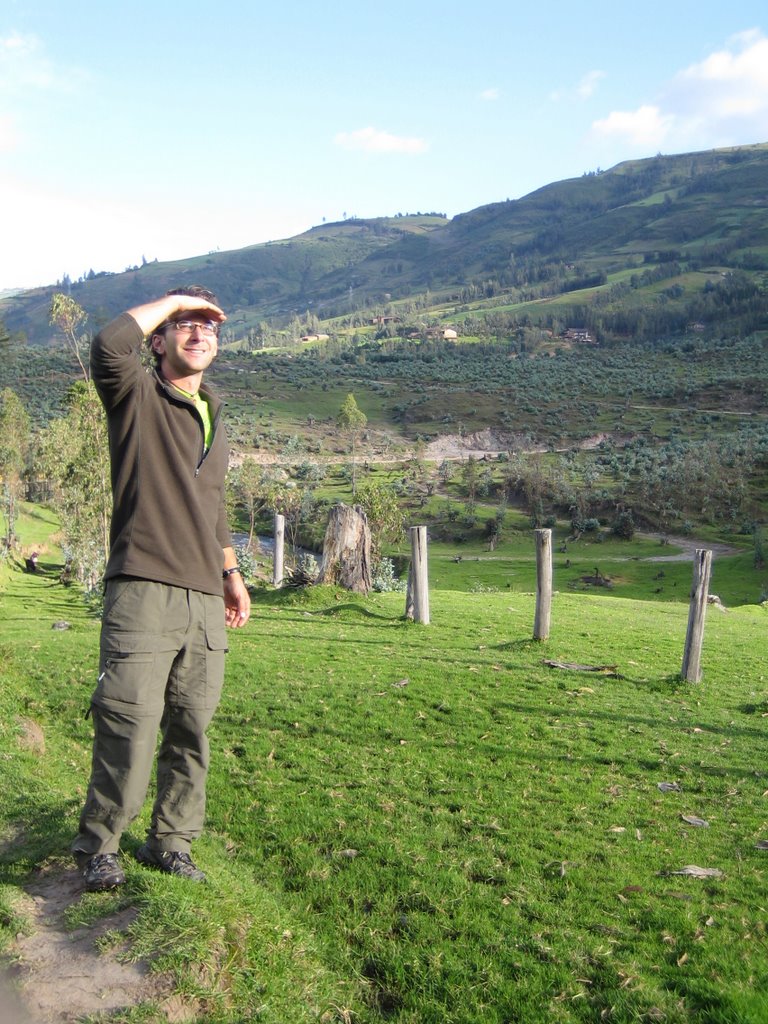
Thursday, November 23, 2006

a real tourist

Shortly after sending the new trainees back to Lima, and recovering from illness (I’m sure I’ve lost at least 10 pounds this year). I meet up with two friends for a well deserved trip south to the department of Ica. This coastal department neighbors Lima and is the home of five PC volunteers. It’s almost always hot year round, due to its desert-like climate, and can be a little overcast from the Lima fog and smog.

None of the three of us had ever been to Ica, and even though it’s only a few hours by bus from Lima we had been reading in our guide books that it’s a great tourist vacation spot. In spite of the fact that Peruvians think I’m a tourist everyday, (at least when I’m out of site) this time I really wanted to be a tourist. The trip wouldn’t be too expensive, as long as I could stay on a budget (yeah right!). We had planned to hit three of the major cities in the department, Pisco, Nazca and Ica.

I hadn’t been away from La Libertad for months and was really looking forward to a relaxing and adventurous trip. On Halloween my good friend Emily and I took an overnight bus to Lima, arrived at 7am and immediately looked for the bus terminal to the city of Ica. We knew it was another 4-5 hours south to the city of Ica and we wanted to at least do some site seeing that first day. In transit we passed corn, cotton, asparagus, banana, and olive grove fields. Our friend Amy, who lives in Ica recommended that we stay in Huacachina which is a beautiful oasis in the middle of sand dunes. The oasis once was natural water, but now it’s pumped in from a far. People told us the water had special healing powers.

We checked into a cheap but posh hostel ($10 a piece) and learned from the staff about the popular sports of sand boarding and dune buggy rental. Other volunteers had done it and we thought it was worth the experience. Besides, I though, “When am I ever going have the opportunity to sand board on desert cliffs?” I’m from NH for Christ’s sake! Emily and I thought about it over a drink at the bar by the pool. We met a girl from Ireland who had just come in from Nazca. She told us about the famous Nazca lines and how it was spectacular. She was terribly sunburned from hiking through Chile with a group of Europeans.

We left our hostel to go to the bank in the city of Ica and see if there was anything touristy we could do while waiting for Ann to arrive from Lima. Due to the fact that it was a holiday (All saints day) the wine vineyards were closed. But to our advantage the city museum was open. A taxi driver in Trujillo had told me the night before that it was a cool museum especially for the mummies.

And the taxista was right. Ancient mummies from pre-Inca civilizations of the Paracas and Nazcan people. What a site! I have a fond appreciation for hidden tombs, ancient burial sites, barbaric surgical procedures, and learning about the beliefs and customs from these Peruvian ancestors. The museum also had a fascinating display of deformed skulls-similar to the Chinese foot binding history, these ancient people believed in tightly wrapping the skulls of their infants. Resulting in cranial deformities and even death. The skulls looked like alien remains, oval in shape, instead of round. How creepy!

Ann arrived that night to the hostel, and we planned out the next three days. We thought best to see a vineyard, (Ica is Peru’s wine country) and than sand board in the early evening to save ourselves from the sweltering sun. We toured two wineries, known as “bodegas”. Tacama is south America’s oldest winery. We met a family of Spaniards that day, and joined their tour. They were impressed with our Spanish, and that we could hold our own at the wine tasting portion. I bought a bottle for my host family. Later we ate toured a less commercial, more authentic home made winery where we learned about the more genuine way to make wine. This place was called Bodega Lazo, and was definitely less touristy but fun all the same. We tried their Pisco-from the national Peruvian drink Pisco Sour- and I choked it down. It’s like 90 proof.

Sanding was left to the afternoon, back at Huacachina. We argued prices and eventually got what we wanted, S/.40 a piece. Ann who is the most practical girl I know (she brings a small backpack for a week long trip) had only brought one pair of shoes…heals. I said, “Your going into the dunes in those? Damn girl!” Evidently she had forgotten about this opportunity when packing so lightly. The dune buggies are large, hand made 4x4 vehicles that looked dangerous to even stand next too. But I jumped in. And we were off, our driver tearing through the little town to place us neatly on top of the impressive sand dunes. It was anything but neat, like an amusement park ride. I was jolted, jostled, and molded into a new human being as we speed through the dunes, flying through the air over hills and peaks. Sand blew into my eyes, and into my dread locks. Once stopped, we appreciated the view, and jumped back into the car, snapped seat belts (logical) and drove off to another cliff.

From this point we tried sand boarding, very similar to snow boarding minus the snow. And the board is very basic, I mean a child could have made it in shop class. A plain rectangle, double tipped, and fabric bindings. I laughed even harder at the thought of Ann in heals in the shitty bindings. But, as the soldier she is, she sand boarded barefoot. Now that’s hardcore. After a few tries, and a few face plants in the sand…I picked up the technique. I was part of the elite few on the internationally known, John Stark Ski Team at one point in my short life. And turns out, sand boarding is way easier than snow boarding or even skiing for that matter. They waxed up our boards and we were off. Even Emily and Ann, self proclaimed “non-athletic” were rocking the sand (no pun intended) and taking hilarious pictures.

The sunset from the dunes was remarkable. And than it was dark. And cold. That night was left for Nazca the much anticipated excursion farther south to see the lines. Now these lines are more than special, they are enigmatic ground markings that have bewildered scientists and locals for centuries. And they can only be seen from one place, an aerial view by aircraft. The lines in the desert sand were made by the nazca people in AD 300-1000. There are dozens of symbols but the most intriguing are of plant and animal life of that time period. We arrived that night in the city of Nazca and were bombared with tourism agencies and taxi’s the moment we stepped off the bus. I wanted very badly to be a Peruvian and not an American in that moment. Complete chaos, people yelling, and a decision needed to be made. I knew we wouldn’t be going through this if we weren’t such blatent looking tourists. A man yelled my name. I looked up and he motioned us to his taxi. He was a hotel owner whose co-worker had met up hours earlier on the bus ride from the city of Ica. We agreed to stay at his hotel, because it was ridiculously cheap, $3.00 a piece.

Let’s just say the hotel is not worth writing about on this blog nor to the publishers of Lonely Plant or the Rough Guide. It’s just a place to rest, I say. We were there for a mear 8 hours. Fortunatly I took the advice from somebody to not eat breakfast as the short flight over the lines can be nauseous provoking. We watched a short video from terminal as the pilot prepped the plane. And once aboard I clutched on to the barf bag. How romantic. Emily took most of the pictures out the side windows as I dry heaved. And once that passed I enjoyed the rest of the flight. And I thought I was conditioning myself of this motion sickness problem by taking such rustic means of transport throughout the country. I guess not. I have yet to throw up on a Peruvian bus. And god knows those little 15 hour rides can be torture.

We ate breakfast and took a long drive out to a series of ceremonial burial cemeteries where the Nasca people built underground tombs and mummified their loved ones in the fetal position. The sun has damaged some of the sites, but most were in remarkably good shape given their age. The coolest part was the hair of the mummies, visible, thick dreadlocks. Evidently the longer and thicker your locks the more prestige one had. Sounds like my kind of peeps.

Next, our taxi driver took us to a ceramic making artisan, and than to a gold mining shop. Both owners still use traditional means in their craft. The ceramic maker molds, paints and glazes his work all by hand and heats the pottery in a adobe like stove. He uses his own facial oils to glaze his work. Likewise the gold miner uses a special filtration process to pull gold properties from other precious stones, they than purify the gold by grinding it with huge boulders. It’s refreshing to see laborers who maintain the age old methods of their artisan work.

We did some shopping in the plaza of Nazca and visited another museum less exciting than other exhibits we had seen, but a very modern and clean place. I liked the aqueducts outside the museum which were still in their original state. Emily realized at that point that she left her camera in Huacachina the night before at a store. We took a quick bus back north to Ica to look for the camera. But upon arriving at the exact location where she remembered setting it down, it wasn’t there. Fortunately for someone, it was a good find. But that left us down on luck, spirits low.

Still to come was another bus ride north to Pisco. This third city was similar to Ica and Nazca, in fact there town centers are so similar I was getting confused about where I was. That’s a sign of real foreigner. Lost, Confused and Helpless. Luck for me, I had two female bodyguards. We checked into our hotel, recommended by Amy, and made reservations next store with a travel agency who would take us to Paracas and the national reserve. Amy who is a PC environment volunteer works in the reserve to preserve the Ballesta Islands. While I’m in the sierra teaching people how to washing their hands, she’s on the coast playing with seals, sea lions and penguins. ¡No es justo!
An early start of 7:30am got us on a tour bus to the reserve. We took a boat out to the islands and saw another mysterious figure in the sand (much like the lines) but of a large candle stick instead.

The fog swept in and as we moved further from the coast my bare legs trembled. Shorts. What a dumb idea. They were the only clean thing to wear. The Ballesta Islands were hugs rocks covered with a diverse ecosystem of birds. So many different species land there, some endangered, that it’s prohibited to land and walk on the formations. I don’t think I’d want to though, after seeing all the guano-(bird poo). The pelicans, terns, penguins, seals and sea lions were impressive. I filmed a short movie from the boat with my camera. We made it back to the dock, ate breakfast and took off to see the rest of the reserve which Amy said was not as impressive. “It’s mostly desert, Matt, but there is a rock formation called the cathedral which is worth seeing.” So Ann stayed back, and Emily and I went to out to the reserve information center and to the Cathedral. I imagined something like Stonehenge, but it was a cave built into a cliff side. It was very windy, and sunny.

We left the reserve and to our surprise, in the tour bus cabin (where we sat) sparks began to fly. Emily freaked out, just about attacked me to sling the door open and we both jumped out to watch in horror as the bus exploded. But nothing happened. We waited on the desert sand, the bus a mere 20 feet away and still nothing happened. The rest of the passengers, a high school tour group, their chaperones, and a married couple (all Peruvian) waited in the vehicle patiently for the problem to be fixed. Meanwhile, Emily and I stomped in the sand, swearing in English about what “could have happened”.

Once again, people thought we were crazy. We were motioned to get back on the bus and sit next the sparking dashboard, reluctantly we obliged. It was the death trap, or a long walk through the desert to the city. We passed straw houses, with thatched roofs and imagined what life would be like for those people. All the sudden my adobe room didn’t seem that rustic. Least I have windows and a door.

The rest of the trip was uneventful; we made it back to Pisco, than to Lima and took an overnight bus to Trujillo. I took out my contacts, ate an “empanada” and fell asleep to a lame dubbed movie.

Sunday, October 29, 2006

Projects, Projects, Proyectos

It´s been a long and busy month, this October. Certainly my heavy work load has made the time pass quickly. I´m continuing with my community health projects, and secondary activities, and as always finding a weekend here and there to escape to Trujillo for a break from the sierra.

I´m making house visits in Nuevo California to families in desperate need of health education. Since August we´ve covered many topics, handwashing, self esteem, decision making, oral health, communication, safe water, diarrhea, and reproductive health. I see little progress with the mothers and families, which one may say is depressing, but I know changing habits takes more than a few months of teachings.

The youth group I work with brings me a lot of enjoyment. They are full of energy and ideas, and have gone from a shy group of kids to a loud and boisterous bunch. We too have covered many health topics, those listed above and specific topics for their ages. Nutrition is a recurring subject (if they start to change their diets, they can see results as they grow into adults), we´ve played leadership games, and organized a cooking competition in the school. -The most balanced plate?-First Prize included a dish with meat, dairy, fruits, vegetables and grains! ¡Qué Rico! Those of us from the health post were judges and got to try all the food.

I´m also working with a group of parents-the moms and dads of kindergarten kids in town. This group has been harder to consistently meet with because the parents are busy working in their fields or in their homes. We´ve postponed and rescheduled many meetings. I have to use different techniques teaching parents about family health, many can´t read and have very short attention spans. Not to mention they bring there kids and toddlers to our meetings. You can imagine the environment, it´s far from conducive to learning. I found that I have to offer a lot of incentives to get people to attend, like free soap, tooth brushes, snacks, and free food.

Last week we hung up the finalized map on the health post wall. Juan and I had been working on it, on and off for 8 months! I´m very proud with the final project. It´s really a work of art and very useful for community health assessment and analysis. The house number projects cooriletes with the house numbers on the map, and every community member has been counted. Babies to the elderly.

This month we´ve also been furiously vaccinating everyone between 2 years old-39 years old for German measles and Rubueola. See, these are vacccines that Americans receive at birth, but Peruvians never had access to the vaccines, until now. After a long history of childhood illness and deaths, the gov. received foreign aide in hopes of vaccinating 100% of the population (of stated ages) to erraticate the viruses. The national campain is part of our work as peace corps health volunteers because we can educate, promote and organize people to participate in the campaign. Many of my friends are speaking over the radio or local television stations about the campain, and others are making house visits. I´ve been vaccinating too, but mostly helping with the record keeping.

And speaking of viruses....I just got over a viral infeccion, four days of hell. As timing goes this was the same week that 5 PC trainees from Lima came to shadow me in Carata. They also arrived with a trainer, and a language teacher. So not only was I suppose to train newbees but do it with diarrhea and vomit. Nevertheless we completed amazing projects in just four days, like building a stove, a letrine, and attending and teaching three meetings. They even helped me with my water project by collecting hygiene/sanitation data from the locals. I meet some great friends and was proud to be a part of their field based training. In just one year I´ve gone from trainee to trainer. It takes a village to raise a peace corps volunteer!

Sunday, October 01, 2006

¡1 YeAr AnNiVeRsArY!

On September 23rd I completed a full year in Peru. Since arriving last year, I don’t exactly feel different but I’m sure I have changed in spite of this work. I’m extremely thankful for surviving this long, and I’ve realized that its possible to get through the overwhelming 2 year commitment. What’s one more year after all this? The slow process of cultural assimilation is a bumpy road. Will things ever become normalized? In light of my one year anniversary, this entry is dedicated to exposing certain aspects of life in Peru that I find surprising, unimaginable, shocking and absurd.

In no particular order, here we go….(Let is be known that these “facts” may not be universal to the country, nevertheless are worthy of noting. Not to embellish on Peru’s problems but more so to report my personal findings in hopes of recognizing how far we’ve come, and how far undeveloped countries have to go.)

The legal system- It’s said that…

One can obtain a fake professional license for any career. Doctors, lawyers, nurses, pharmacists, accountants, police, etc, and they can find work relatively easily in these fields.

It’s not uncommon for peasants to occupy the land of others and claim (after 5 years of occupancy) the land as their own.

In light of the fact that small villages don’t have police, many locals for a community police committee and have been know to ridicule, torture and kill delinquents and thieves by barbaric means.

Police and lawyers can have connects with criminals and be the motivators behind incidents for their own financial profit.

During election time (voting is mandatory for all) votes have been falsified, proving that the stated voter is deceased, under age or non-existent.

Theft is so common in large cities that every storefront is gated and all transactions are done between the bars.

In the country side live stock and domesticated animals are stolen, poisoned or abused on a daily basis. Or they simply live underneath the kitchen stove as in the case of our guinea pigs.

Peruvians are masters of creating selling fake products. I’ve encountered fake currency, fake medication, fake electronics, CD’s, DVD’s, car seats, drivers licenses, ID’s, and worst of all, fake Winnie the Pooh costumes.

Driving is legal at age 18, although the law is not upheld, and almost all drivers don’t carry any of the correct documents, such as a car registration, license, owners papers, etc.

Education- It’s said that…..

Teaching is the #1 most common profession. Why? Because the salary is decent, the preparation is short (2 years), and the schedule is very very flexible.

There are so many vacation days during the school year that it’s not unusual for kids to only study 3 days out of 5.

The school day is 5 hours, not 7 and ends at 11th grade, not 12th.

The teachers get a day off on their birthday and at least 2 free days at the end of the month for pay day.

Less than half of first graders graduate from high school.

Our school kitchen in my village consists of an open fire pit where mothers and infants prepare un-nutritious food for youngsters.

After a long night of drinking, most teachers don’t “call in” but yet, teach while drunk or with hangovers. And when the teacher is actually sick, there is no substitute, only another missed school day.

Health and Environment- It’s said that….

The wood companies in Trujillo burn wood from their factories and the ash passes through the air coating local neighborhoods in a grey dust.

This month of Oct. the country will start a national campaign, vaccinating against measles and German measles. The target population is 2-39 y/o It’s evitable that someone will invent a fake vaccine (in hopes of making millions and moving to a neighborhood near you.)

I met a family who told me their daughter pooped worms.

People poop worms because they:

A). Drink contaminated water
B). Play in the dirt with animal feces.
C). Transmit the parasite through the “Fecal—Oral route”.
D.) Don’t wash their hands
E.)All of the above

It’s E.

Diarrhea leading to dehydration is the #1 factor causing a high infant mortality rate. When considering the prior statements A-D, the situation worsens.
People think that if they bathe (especially with cold water) they’ll get sick. So they don’t bath and they get sicker.

Belief in God is so strong that disease transmission is thought to come from above (as a punishment).

Most trash disposal is done by burying, burning or dumping (batteries, oil, chemicals all go to one place, the ground).

Lima, the country capital is so polluted with smog, the weather channel reports “partly cloudy” 364 days of the year.

Many rural and some urban areas have water only 2 hours a day. Water is than kept in open containers increasing the reproduction of malaria ridden mosquitoes.

A fun dare for peasants is to try ingesting plant insecticides to see if they live.

Other- It’s said that…

There is no return policy at stores, ever.

The rule isn’t “You break it, you buy it” better said, “You buy it, it breaks”.

More than 50% of locals in my village use their backyards (and those of their neighbors) to urinate and defecate.

Pregnant woman give birth squatting.

I’ve eaten or been served, goat intestine, cow liver, tongue, pig face, and skin, chicken feet, pig feet, sheep skull, rabbit, guinea pig, and raw fish.

A large percentage of Peruvian Catholics are couples who aren’t married, but live together and have children.

Some men have more than one wife.

Some parents don’t know the age or full names of their own children or spouses.

Illiteracy is a normal fact of life, not only for adults but children who aren’t in school.

No public or private bathrooms have toilet seats, or toilet paper, ever. BYOTP.

I read in Lonely Planet that in the Jungle there is an Amazonian parasite that lives in the water, if your pee in this water it can enter your urethra. Awesome.

If you don’t give a certain percentage of your annual earnings to the local church your business or family will be cursed the following year.

The average Peruvian makes less than $3.oo a day.

And my personal favorite...."Water that flows is obviously clean and drinkable." So than I ask, "Since my pee is mostly water and it flows, would you drink it?" And that really gets them thinking....

Tuesday, September 05, 2006

A letter to another volunteer, quotes

Below is a letter that I mailed to a friend, Katie who lives in the department of Lambayeque in a rural town.

Tuesday Aug 29th, 2006

Katie, What up Cuz? We haven´t talked for a few weeks and you´ve been on my mind. Here in Carata I sit in my cold little room, the local dogs bark in the background. Tomorrow is a holiday, Sta. Rosa de Lima, so the town is even more dead than usual (but I like it that way). I feel like I´ve been in site forever. It´s been over two weeks, going on three before I bajar to Trujillo Friday morning.

I can´t really complain though, it´s just the usual commodities of life that I chase. I haven´t eaten real food in a while, nor taken a hot shower or spoken fluent English, but these are all things that I´m growing accustomed to living with out (surely, you are too).

What a long strange trip this Peace Corps adventure has been. Remember the P.C. advertisement with the man hanging from the 100+ directional sign pointing to different countries in the world? I thought, how exotic! But really, how gullible was I? Well girl, a year later, what do you think?

Yesterday I went to visit the local Alcalde in regards to agua potable. Juan and I wrote an oficio explaining the severity of the h20 problem and we had almost all the important people in town sign it (those with stamps of course). So, we hiked down to Motil a neighboring town, and jumped on a micro to Agallpampa.

The Alcalde was actually in his office! Que suerte! We explained the oficio, the project and a little about SPA without giving away too many important details (such as SPA= Free $US Dollars!). Unfortunately Mr. Alcade couldn´t give us a straight answer, if he´d support us or not. He was more interested in learning about US culture and the meaning of some damn English word he heard/saw on TV. Visgoshs. What the hell? I hate it when they that, how do you translate a made up word? What do you say, sorry Mr. Mayor, you´re an idiot, that´s not even English! The best I could come up with was Viscous, without hurting his ego, I explained the definition. Whatever. Later on, Juan was reading one of my Newsweeks and came across the mystery word, ¨because¨. What beautiful pronunciation.

I´m resigning from my current position as a English teacher. Ya No Ya. Lets just say, it´s not pretty. I feel used and abused and unappreciated. And P.S., I´m a health volunteer not an English teacher!

On a lighter note, this host family Emilia found is really growing on me. So much so, that I (gasp) really want to bring them back Christmas gifts from the US in January. The 9 y/o girl that lives with us, Merli is my little buddy. You could call her my host sister. We´ve begun reading fairy tales every night before bed. It´s good reading practice for her and me! Besides I´m learning all kinds of new Spanish vocab like evil step mother, wicked witch, dwarfs, and all the world of make believe. I´m going to keep up the reading with her, as long as she´s got the energy to do it!

What´s new in Laquipampa? Isaac and I should come up to camp. I´ve got this new tent that I don´t even use. In Oct. and Nov. I´ve got some free weekends. Are you game for thanksgiving in Ancash? I can´t wait. And just a few weeks after that I´ll be eating bagels and cream cheese with chai tea in the the good ol´ US of A.

Here´s a trip down memory lane...

Remember- Apple pie? Sushi? 7/11 Burritos? Berry Berry Kix? Tropicana Orange Juice? Movie Lovers Microwave Popcorn? Fudge? The salad bar? Apple Cider? Chex Mix? Pita bread? Tabule? Seven layer dip? Blueberry muffins? A-1 sauce? Enchiladas? Cus Cus? Ben & Jerry´s Chocolate Chip Cookie Dough ice cream? Egg Nog? Tacos? Veggie Burgers, Ants on a log? Waffles? Ranch Dressing?

I´m sure to make myself sick after eating all that, but it´s wonderful to dream! Love, Mateo


Here are two quotes related to how i´ve been feeling lately...

¨To succede in this culture it´s necessary to always have a plan B. Plan A is destined to fail for uncontrolable reasons such as relying on transport, weather, technology, and considering emergencies, your doomed. But the single most important reason for failure is depending on human beings. Things are reliable, predictable and safe in the U.S. In Perú, every element of life is chaotic and wreckless. For example, while writing this , I was conviently interupted to help retrieve a key locked in our health post. Plan A, pick or remove the lock. Plan B, break the window. We choose the later. ALWAYS HAVE A PLAN B.¨

¨I often find myself feeling angry, an anger that had been hidden deeply inside me for years. It wasn´t until this experience that it has emerged. I´m certain that these strong feelings are connected to my role as a volunteer. There is so much that I can´t control and it seems to spin into a helpless whilwind.

There is the continual lack of basic necesities like water, electricity, heat and comfort. The broken promises from community members, teachers, school principals, and work counterparts. The ubiquitous cultural habits related to punctuality, organization, prioritization, travel and contamination. And even more specifically, the ignorance, miseducation, disrespect and ungratefulness.

It´s these reasons that provoke such powerful feelings. I was accustomed to just floating through I cushy life with few problems. Here in Perú every action I take, hundreds daily, are done for different reasons. I´ve had to re-learn how to live as if I were Peruvian, just to survive. I´ve adapted my actions to conform to peruvian society. And personally, thats why this is the hardest job I´ll ever love.¨

Sunday, August 20, 2006

Electricity, stone coffins, Gocta, and small doorways

It’s been a long time……since writing. Here are my legit excuses! We didn’t have electricity for two weeks in July. Every chargeable item I own went dead. Including my laptop. The reason for the power outage is just as absurd as the duration of nightmare. A local man from Yamobamba didn’t like the fact that an electricity pole lay on his property so he took matters into his own hands and climbed the pole to cut electricity. This gesture not only cut his own power but that of 5 local villages. After hiring an attorney and asking for large amounts of money he said he would turn the lights back on. This game between the local and the municipality went on for weeks until there was finally a settlement. The local got his money and the villages got electricity. Nonetheless, people were pissed. I travel three hours to Otuzco one Sunday just to charge my cell phone.

The best part about the electricity game was that towards the end of the two weeks I went to Trujillo on a weekend to check snail mail, go to the bank, etc but most importantly to charge all my electirical items. I brought my razor, phone, ipod, and camera. This was a Friday. That night I heard on the news that the city would be “doing maintance” and there would be power outages from 7am-7pm. Was this a joke? I had just traveled four hours from the mountains to the coast to charge everything I own and there wouldn’t be power here either?! HELL I TELL YOU.

I called my uncle and sister that afternoon and they were shocked to hear that a city as large as Trujillo (pop. 861,044 ) could turn the lights off all day. Remarkably, the city ran a smooth as usual, just like any other day. Remember back a couple of summers ago in NYC when there was a power outage that wipped out most of the city? Americans were hoarding supplies like it was amegeddon. An in Peru? Just another day of uncertainty.

So that’s my first excuse for not writing in weeks. Next has to do with a long visit from a great friend Knox, aka Tio. Knox arrived the third week of July just in time to celebrate Peruvian Independence Holidays. He stayed in Lima with friends and made his way north to Trujillo to meet me. Surprisingly we connected without any delays or problems. I was elated to see him and excited about our next plans. Along with him he brought many toys from the states, like a waffle ball set ( an almost impossible find here), a thermometer, reading material, and a new pair of shoes. I was grateful. The most original surprise was a video post card from NH of my parents and his family. We watched it with my host family and they were awe struck at the houses, the motorcycle, the lake and especially the golden retriever who swam (UNDERWATER) to fetch balls. For some reason the dogs here don’t swim or play fetch! Weird, eh?

Above all, Knox had an excellent visit. We visited the capital city of Chachapoyas in Amazonas. Which is another department (state) half Andes half Jungle. I had yet to see any of the jungle in this country and was pretty impressed. We lodged locally in the city and took day trips touring local archeological sites and main attractions. We saw stone coffins (sarcophaguses) built high into the cliffs honoring the culture of this pre-incan civilization, the Chachapoyans. We visited the remains of an existing village called Kuelap and toured the intricacies of the stone structures. My favorite day trip was to an infamous waterfall called “Gocta” which was recently discovered and is claimed to be the third tallest waterfall in the world. We were so impressed, even our underwear soaked through in hopes of getting as close as possible. See pictures from Links Section.

As we made our way back from Chachapoyas through Chiclayo and south to Trujillo our next mission was to acquire a rugged rental car for the next week in my town, Carata. Knox jokingly compared, renting a car in Peru is like trying to rent a bulldozer. You can do it, but it’s not easy. Let just say tourism, has a long way to go in this country. The idea that you can simply rent any car model and be free to explore (as in most parts of the world!) doesn’t happen here. Travel is based on an amazingly thorough busing system, which is cheap and usually reliable (when the buses aren’t being high-jacked).

We eventually got a truck and got on the road to head east to the mountains. Knox was truly astonished to learn that the quality of roads was like nothing he had ever experienced. And this coming from a man who has years of experience driving on some of the worst terrain in Central America. I’ve gotten so used to going 2 miles an hour on back roads that resemble river beds, I’ve come to think it’s absolutely normal! We arrived in Carata and although he had seen pictures on the web, there’s nothing like the view at 9,000 ft. Home Sweet Home.

To prevent altitude sickness, we spent a good two hours eating lunch and trying to buy a birthday cake in Otuzco (2,000m). I’ve learned now, after the sad but true story of my sister and boyfriend who were genuinely miserable (but were good sports for toughing out a crappy time).

Knox helped me with work (house visits, English classes, etc.) and also spent time meeting the important people of my day to day life, the fam. We toured the town, and I introduced him to locals, kids and the drunks. I explained to him the challenges I face, and the hopes of achieving some of my project goals. We took two day trips, and really abused the rental truck. Fortunately it didn’t rain at all while he was here. In return for receiving the fabulous video post card, we made a short film from Carata for those of you back home. I’d like to find a way to link the video from this blog, any suggestions?

Ps- Knox made it home alright even with terrorism threats but he did arrive a little bruised and battered from hitting his head on door ways and fences designed for a country of midgets.

Sunday, July 02, 2006

Carata´s Anniversary, H20, and B-Day

June has come and gone so here are some updates from Carata Perú.

June 5th-8th brought four complete days of a fabulous party in my own village. The reason was to celebrate the town’s anniversary, and this meant lots of live music, dancing and the inevitable consumption of alcohol. For months I had been hearing about how great this party would be and that it was one of the best traditions, I obviously couldn’t miss it! And all the talk rang true. I was most impressed with the organization from locals and the amount of money spent. It dawned on me that these people really can get things done and work together if they have a common goal. We do have hope for future projects…maybe.

The first day of the party was complete with the receiving of the first marching band by the ¨mayordomo¨(who was the master of ceremonies and bankroller for most of the events). It continued with a procession of 8 donated cows that were killed to feed people for the week. The killing of the cows was incredible enough to witness. They were brought out to a field where men drove kitchen knives through their skulls until they dropped to the ground. I will never forget it. But wait it gets better…. The party continued with dancing and a youth talent show at night. The next day two more marching bands (of 25+ members) arrived. Rockets were shot off all day as early as 6am. Ann came from her site to visit and we danced, drank and hung out with my host family and the relatives (totaling 30 or more!). We watched a cock fight at an official corral, some local’s house. Cock fighting is a popular sport here, and very competitive and serious. Men raise specific breeds of roosters for fighting and bet on their performance. Ann was horrified, but I thought it was pretty sweet.

The electricity just went out, hours later I’m back retyping what I had written. The lights have been going out a lot lately. It’s so annoying. But I can deal with no electricity, it’s when the water goes. That’s really fun.

In the end the party was enjoyable, especially the ¨Castillos¨ which are large wicker towers they had built around town. At night they were lit and we enjoyed a pyrotechnics show of fireworks. Imagine a life-size erector set 6-8 stores high. Very impressive.

I’ve been working with other volunteers as a traveling theatre group presenting a simple play about a girl and her unhygienic habits. It’s a fun way for us to educate youth, especially the elementary kids and have a good time doing it. I’m eagerly awaiting the date when we reunite in my site to give the play to my school. I play a Peruvian doctor (very convincing, right?)

Another ongoing assignment is doing monthly water reservoir inspections in my town and surrounding villages. I’ve found that two of the four reservoirs have consistently failed code and could really use some help, one of the two being my own village! The water committee never meets, rarely cleans the reservoir, doesn’t treat the tank with chloride, and frequently encounter problems with broken tubes throughout the town. It’s a disaster really. I’m personally making an effort to work more in the area of water management with the ultimate hope of reforming the water committee, training them in how to work together, and how to maintain a healthy reservoir for the village. Our statistics show that the two towns with poorly functioning reservoirs are directly correlated with higher cases of illness and children with cases of diarrhea and parasites. Worse though, without clean water, we’re challenging communicable diseases, and that’s exactly what I’m trying to prevent.

June 17th was my 26th birthday, my first birthday spent out of country. I got some great phone calls cards and emails, thank you to everyone who contacted me! It was truly a wonderful birthday weekend. I traveled north to the coastal city of Chiclayo in the department of Lambayeque. My friends completely spoiled me by taking me to a country club to watch the US vs. Italy game, and eat and drink delicious food. A cake was brought out and moments later my friend Jean shoved my face into it (a Peruvian tradition). That night we went out to a club, and I received free drinks the whole night, complements of the club owner. It helps to know people I guess! Thanks Brent!

More recently, Juan and I have almost finished painting house numbers for the town. We’ve started nailing them to peoples houses and charging S/.1.50 equal to .45 cents. We’ve spent more than S/. 200.00 soles (Peruvian currency) on materials for the project. The idea is that we get reimbursed but sadly many people cannot even afford a .45 cent house number. It’s frustrating because we’ll surely be out money, but a common reality. I miss you all and think of you often from my adobe house in the mountains…Love Matt

PS- Congrats to PERU 7 who arrived at the end of this month, a fresh new group of Business and Youth Development volunteers!

Doc´s visit- 6/13

6/13--I’m writing to you on a cold Tuesday night from home. I can honestly call Carata my home. I just came upstairs from having dinner in our small adobe kitchen. One of the school teachers and I conversed about the unlikelihood that the neighboring volunteer Ana would marry him so he could gain residency to the U.S. It’s actually a pretty common conversation, that we as volunteers have come accustomed to dealing with.

My room is warming up now, I’ve got the space heater on, but still wear a winter hat, and it’s probably a chilling 45 degrees outside. (Did I ever think I’d be cold in June?) The environmental diversity of this country amazes me. Some of my friends who live far north practically on the boarder of Ecuador, and south of Lima live in desert like conditions. It’s so hot they can’t even sleep. Some are talking anti-malerial meds, which in itself hinders sleep. Although I’m freezing at night it’s beautiful during the day, I really can’t complain. I just hope I get a chance to use my new tent one of these nights. (Thank God for therma-rests, smart wool socks and mummy sleeping bags). I keep on forgetting to buy a thermometer.

My English has gotten so rusty, I just spelled socks with an x. Sounds like box. The spell check is handy for gringos like me who have forgotten their native language…..

Today was Tuesday, a long day. I woke up a couple of times last night thinking I was going to over sleep and miss my 7:20am English class. Nope, still haven’t missed it but getting up at 6am or 6:30 is a struggle when it’s still cold and dark outside. The classes continue to discourage me, because I know that teaching about health will take these students much farther in life. This is how I see it, sure they’ll learn some basic English, but if they don’t understand the general concept of washing their hands they’re going to die from illness! Remember Maslow’s Hierarchy of Needs? I do. Freshman year of college, Nursing Health Assessment. The theorist Maslow defined that humans first need the basics before anything else. Food, Water, Shelter. Health came way before “Second Language Classes”. Call me pessimistic, but its true!

I’m pealing paint from my fingers from working on a project today. We’re painting house numbers on blocks of wood for the village. It’s a big project, but simple and necessary. The houses are unnumbered and there are no street names. There are no streets really, just large paths separating neighborhoods. We are going to make over two hundred and continue from there to see if we need more. Eventually we’d like to make street names. I want to name a street after myself. Egocentric right? It still would be funny.

My doctor came to visit me Sunday. We have two Peace Corps doctors, a man and a woman both Peruvian. They are excellent and work extremely hard to monitor the health of the 116 of us. Jorge has won us over with his humor, wit and easy going personality. He was called up to La Libertad the department where I live to visit another volunteer who was sick, and as she became better he decided to take the opportunity to travel to a couple of our sites just to visit. He tries to visit every volunteer once in their site during their two years. Jorge arrived Sunday night, and after realizing the extent of the trip from my capital city, Trujillo, I hope he didn’t have doubts to immediately turn back.

Monday morning I gave him a quick tour of town, it’s so tiny you could miss it if you blinked! I explained some history and facts about my site, and we talked about planned projects I’m working on. He hoped to walk to Ann’s site but than it started raining, and we watched a world cup game instead. Jorge was a great help with the house numbers, taking pictures just like a tourist. He even visited me teaching English. (Jorge speaks English remarkably well!) the rain continued, amd trapped in Carata he made some phone calls and arranged to stay another day. He decided to try and catch a bus back to Trujillo this morning.

I honestly enjoyed the company, and was honored to have our Doc. spend as much time as he did with me. He tells me that when he visits volunteers he usually doesn’t stay overnight, especially two nights! We bonded and I got to know him a little better, since meeting him last year. Even more amazing, is that unlike other staff members Jorge travels like us (volunteers) when he can. He stays in cheap hostels, takes uncomfortable overnight buses, uses public transportation instead of driving and get this…hikes high altitudes! Most of our supervisors fly around the country to meet with us, or local organizations for meetings, or for site development. And when they land at the airport they are picked up in Peace Corps SUV’s. But not Jorge. For this reason and many others he will definitely be a memorable staff member when this Peace Corps adventure of mine comes to an end.

Sunday, May 21, 2006


Elementary students, my kids are older (13-17 years old).

Pesadillas de la Escuela (School Nightmares)

5/18/06

I’m teaching English to 9th, 10th and 11th graders twice a week at the high school. This Tuesday was especially memorable….The class begins at 7:20am, by 7:30 their teacher, Orlando had arrived. The 24 9th graders arose from their desks greeting him as he came in to the room. Having missed last weeks class I asked him what was planned today and he said they were to take an “easy” exam. I then asked, “How long do they have to complete it?” Orlando responded, “Until they finish.” What? I asked myself. We could be here all day! Before he passed out the exam, I took a look at it. This is when I confirmed that Orlando really doesn’t know anything pertaining to the English language. The exam was full of errors! For example, “Whot’s your name”, “Hove you any sisters”, “He, Charles” (Hi, Charles), “Ello, Jhampiere” (Hello, Jean Piere), and the best was, “I hove not any whit wine”.

I’m not sure why Orlando was elected as the English teacher this year. I’ve been teaching with him since the beginning of April and he has not once tried to speak a sentence of English with me. I’m sure that he didn’t request to teach English, it’s more likely he was appointed by the school principal. Knowing this frustrates me, because some of the other teachers actually try to speak English to me and have a better understanding of grammar.

So, part of me wanted to laugh and the other part of me felt for the students and how much more confused they soon would be after reading the exam. Nevertheless, Orlando handed out the exam, and I watched in terror. What was I suppose to do?! He had made 24 photocopies of the exam which in it self is not a simple task (it included traveling 3 hours to Otuzco and 3 hours back). And I didn’t want to undermine his intelligence in front of the students, so I decided to meet with him after school to go over the results and fix the errors.

The test included three sections, translation of common Spanish questions into English, a section of matching and translation of English vocab into Spanish. It should have realistically taken 20-25 minutes to complete. I finished it in 5 minutes. As the students quieted down and began working, we approached 8am. Elementary school begins 40 minutes after high school, at 8am respectively. I usually have quite an audience of elementary students that gather at our classroom windows, and doorway. Most of them know me, and get excited to see me in their school. As it is still some what of an anomaly to witness me teaching another language, that many have never heard.

I’m used to the crowd gathering, usually it’s not a problem, I leave the room and tell them to go to class. But, since my students were taking a test I was especially annoyed with the noise coming from outside. I stepped out of the classroom a couple of times to scold the kids who were yelling my name, “Mateo!” through the windows and door. Since Orlando didn’t give them a specific end time, the clock clicked away and I became more and more frustrated. Orlando got up and left the room. One student turned to another, obviously cheating and I called him out. He looked embarrassed but don’t worry… it gets worse. Some students turned in their tests. Those finished began talking about the answers. We were coming upon 40 minutes since the exam was handed out. More elementary students gathered by the windows, I shooed them away. A girl asked her neighbor for help, and I walked up to her, asking “Would you like help?” “I’m sure I know a lot more English than your neighbor!” Although, it was a sarcastic joke to keep her from cheating I felt bad for humiliating her in front of everyone. Orlando came back, after a 5 minute sabbatical. I was about ready to collect the tests from each of the remaining students but I watched Orlando and he seemed to be fine with the current state of disorder. When 45 minutes had passed I asked him if we should just take the tests from them and he said, “No, let them continue.” I almost walked home.

I was just about ready to flip out, when a girl sitting next to the window, who was still taking her test, (mind you) began asking a younger elementary student standing outside to help her; she took out her notebook and began reciting to the older student! Do they have no shame? I motioned to Orlando and he went over to the students’ desk. Finally, he does his job, I’m thinking to myself. I collected the remaining tests and even though some were not done, there was no way they would ever finish, given the noise in the room.

I began lecture, with only 30 minutes left of class. Orlando wanted me to teach them how to write birthday invitations and thank you notes, but I refused to teach that, knowing that they couldn’t even write the date in English. Baby steps….Before I started, I asked if there were any questions about the exam. They sat in silence. “So you knew every answer, and you all got a 100?” Still silence. We stared at each other, and I went ahead answering some of the harder questions on the exam. I taught them the months of the year, how to write the date, and gave them homework. And we finished with a song, “Twinkle, Twinkle Little Star”. Yes, I sang it for them, even though I was in a horrible mood.

Later that day, after school, Orlando and I met up. I explained to him that there were many errors in the test and next time he should have me proof read a document before he makes photocopies. He said the person that typed the exam made the errors, not him. BULLSH*T! As if I was going to believe that. I wasn’t surprised that more than 75% of our students failed the test. I Guess we’ll be reviewing all that material again. Next time, I’m writing the test.

This is my life as an English teacher in Perú. Uneducated teachers, cheating students, non-conducive learning environments, non-existent parents, unmotivated students and teachers, the list goes on and on. A study by US News and World Report ranked education systems in developing countries. They found based on a countries GNP (Gross National Product) and other factors, Haiti had the worst education system, Perú was #2.

I recently bought a toilet seat for our latrine; I installed it and hung up signs inside the latrine wall, teaching the men how to lift up the seat when they pee. (Toilet seats are a rare find here, most people sit right on the ceramic or hover). It decided it was time for us to live in luxury. haha. Anyway, I was talking with one of the female teachers who lives with us about peeing on the seat. She told me that she heard you can get pregnant from a toilet seat. I laughed and than realized she was dead serious. I asked, “You think you can get pregnant from urine?!” And she said, “No, from semen on the seat.” I explained  that would be very unlikely, but she wasn’t convinced, as she was sure it had happened before. This mentality I may expect from a student, but from a teacher? Especially someone who is a mother of three children! ¡Viva Perú!

Sunday, April 30, 2006

Goodbye April

Goodbye April

I just came inside from washing my bike after a long ride home yesterday. I was too exhausted to even think about whipping off all the mud when I arrived home in the afternoon. I got caught in yet another downpour, and even though they tell me the season is changing, I’ll believe it when I see it… I changed out of my wet clothes, emptied out my back pack, and left it all to dry on my balcony. I had come from Chota to visit Ann and help her to explore a neighboring town called Cesar Vallejo. One of the locales, a man named Constante Reyes, had received word that Ann and I were American volunteers living in the region. He contacted Ann by walking two hours to Chota just to meet her and see if he could program with her. I was planning on visiting her, as we seem to have been talking turns,
(she visits me in Carata, and in return I visit her in Chota) this is a good way for us to keep our sanity.

She asked me to say the night and go with her on Thursday morning to this small village. In the past I have done day trips to see her, staying overnight at Ann’s host families’ house allowed me to see her reality. Even though we are both volunteers who live in the mountains of the same region and we’re only 2 hours from each other, we live very differently. She had warned me that her family was very campesino (read= countryfolk), but it wasn’t them that jolted me, it was the condition of the house in which she lives. She has a small adobe room in the basement of the house, with dirt floors, and plastic tablecloths covering her ceiling to trap the dirt that falls when there is movement upstairs. She’s been fighting a nasty case of bed bugs since she arrived in January with no such remedy to cure. In fact, when Peace Corps came to visit our houses, she was told to find help to pour a concrete floor and repair the ceiling or find another host family. I guess after living in the D.R. as a volunteer for three years, she really has seen it all and can live much more simply than I, or maybe I am just a gay man?!

The beginning of the month went off with a bang, I continued to do the census in Nuevo California, attended a two day workshop in Otuzco on sexual health and birth control methods, went to our monthly regional health post meeting, had a site visit from PC and my program director, missed a town meeting, and baby sat some kids during the presidential election on the 9th. Candidate, Ollanta gained the most votes, than Alan, and Lourdes. The second round will be held in 1 month between Ollanta and Alan.

The next week was Semana Santa, and we were given four days off to enjoy time away from our sites. I had plans to go to a beach in Piura (6 hours north) but decided to stay local in Trujillo to be accessible to Jenni, knowing that she would be returning from Cusco to meet me. I spent a couple of days at my friend Isaac’s site, Pt. Chicama on the beach camping with other volunteers and watching a national surfing competition.

Jenni drove up to Trujillo from Lima on Easter Sunday. How wonderful it was to see a familiar face from home. Bill and she had already been in Peru for four days, which meant they had plenty of stories to tell. We visited the oldest adobe city in the world, called Chan Chan an ancient Inca historical site, and stayed two nights in Huanchaco the closest public beach to Trujillo. We had a great time recalling the past couple of months, updating each other with details, and I was finally able to meet Bill, whom she is currently dating.

We left the coast to climb 9,000 feet into the Andes where I reside in my small village. I couldn’t have them visit Peru without passing through my personal residence. So we arrived, and that’s when I began to feel the indescribable range of emotions of having my own sister experience for herself, my current life. Not 5 to 6 hours later, both Bill and she came down with the typical symptoms of sorroche, altitude sickness. The next morning it still hadn’t passed and Bill was feeling the effects even worse. They stayed recumbent for a few hours as I washed clothes, later in the afternoon they were feeling better to walk around and see some of Carata. We walked through the center of town, the church, the school and played basketball with some of the local kids. Yes, basketball, they were utterly confused, trying to kick the ball.

The next morning I was awoken early by Jenni encouraging me that the only way they could get better was to get to a lower elevation. Rapido. They were both still sick with nausea, muscle aches, lightheaded, a loss of appetite, weakness and diarrhea. I got them some local medication from the health post for their symptoms, but knew getting back to the coast was the best remedy. Hours later when we finally arrived in Trujillo I helped them check into a hotel so they could recuperate. Although the two of them got sick visiting me, I was amazed to see them make the best of the trip by connecting with my host family, giving me advice about potential projects, entertaining local schoolchildren and sharing American culture with Peruvians. By the time my next foreign visitor arrives, I’ll know better as to have them acclimate at lower elevations before climbing such a height.

I came back from Trujillo to learn that cell phone service has reached Carata. The signal is weak…I have two bars, lol. But this means I can make and receive calls. My phone is now more than just a flashlight and alarm clock! It’s quite unbelievable to not have plumbing, nor heat, or any major appliances but yet there is now cell phone service. I’m just going to wait and see how many of the locals, who can barely read, run out and buy a cell phone. (It will happen I’m assured) I also started teaching English this month, twice a week I teach two hour classes to 9th, 10th and 11th grade. It has its benefits and disadvantages; we’ll leave that for another entry.

And so now that the month is over, and both Mom and Dad have aged one more year, I say goodbye to April. And happy retirement Dad, I hope you’ll have time to do all those things you’ve wanted to accomplish. Next up is May, when Rosa and I go to Lima to learn about the SPA grant and how we can fund a few of our many projects planned during my service. Until than, I leave you with a few quotes from Peru 3 volunteers who are just one month short of completing their two year commitment. Congratulations my friends…you’ve taught us it is possible to survive this long, strange journey.

“I’ve learned that PC is about learning to live…really live. It’s learning how to laugh and cry at the same time when you don’t know what emotion your feeling. It’s being able to humble yourself enough to say, “I don’t know” and accept the help that your friends offer. It’s not being afraid to see a different way of life and allowing that to change you.” – Lindsay Parramore

“I’ve learned not to smother a perfectly good silence with chatter. I’ve learned that life shouldn’t surprise me, yet always does. And the universe, demanding as it sometimes is, says, “Here, this is your clay, offered up to you on a platter. Create something that will last.” ¡Carajo! – Angela Jones

Life has become about the “journey not the arrival, the voyage not the departure.”- Lina Biber-Ferro

Pics from April

The long walk home, A local resturant in Huanchaco,
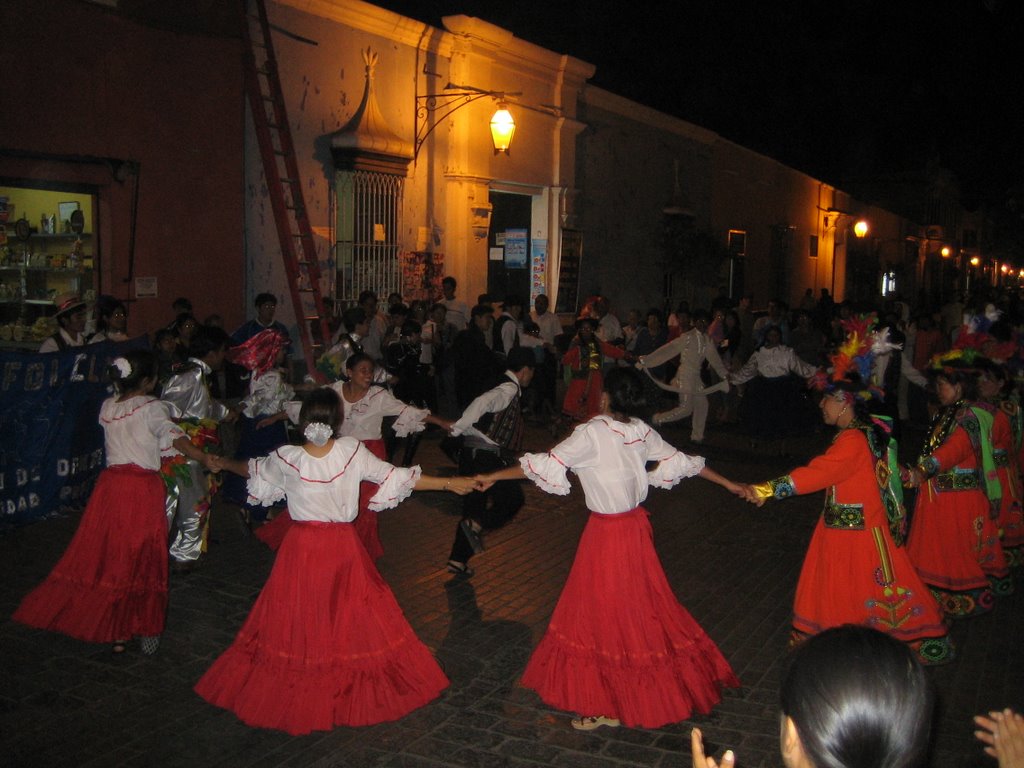
Jenni and Bill, Thanks for visiting me!

Pics from April


Camping on the beach, Local dancers in Trujillo, The surf competition

Monday, March 27, 2006

SEIS MESES!!!

24-03-06

6 MONTHS! March 23rd made six months in country. 21 months left…. What have I learned since stepping off that plane in September? Too much to explain in a blog. I have become much more humble if anything. It’s the poverty I see, the mistreatment of women and children, the pollution, the alcoholism, the uneducated, and the illiterate. How can one country be so rich, so powerful and another be struggling to survive? These past months have made me examine my one personal life in the states. I’ve thought about how much water I’ve wasted, how much money I’ve spent on superfluous items, and how significant the inequalities between my home and theirs. And yet Peruvians continue pushing through life, struggling to make ends meet, staying optimistic.

I’m beginning to learn more about the national government here. As the presidential election closes in on us (April 9th) I hear nothing but talk of the candidates, their affiliate parties, dirty laundry and the history of political corruption. It’s hard to know who’s correct or if “the better party” even exists. The recent elections of Evo Morales in Bolivia and Michelle Bachelet in Chile has sparked interest in locals, especially because Morales is the first indigenous president since the mid 1800´s (last being Mexico’s Benito Juarez) and Bachelet being female. Of the three top Peruvian candidates (there are 23 in total!) one is a very strong female candidate named “Lourdes Flores”. She is currently well favored, but because she is from money people think she will only make change for the rich. I ask, aren’t all three top candidates from money? And the response I get is that of a light bulb going off in their heads…I just hope that Lourdes doesn’t get the boot just because of her gender, due to machismo. Another candidate (who is the people’s choice!) is likely to remove us from Perú if he is elected. I can’t imagine. Let’s hope that doesn’t happen, I would hate to have to finish my service in another country after living here for 6 months!

The first week of March was the last week of summer break for the local kids. I decided to run a kid’s camp to celebrate the summer and get them thinking about learning again. The camp ran four days, M-Th from 9am-12am. Each day was subject to a different topic within the framework of “OUR HEALTH”. We learned about hygiene and hand washing, nutrition, dental health, and the environment. I included as many games, art, music and ice breakers as possible. The kids ranged from 7-13 years old. I had between 7-10 kids each day. In looking back, I think it was a very rewarding week for me. I got advice and ideas from Ana, but organized and supervised the kids solo. Next time I’ll ask for an assistant from an older kid or one of the volunteer health promoters. I’m thinking about starting a weekly youth group to tackle more complex issues, like reproductive health, self esteem, gender roles, domestic violence, etc. See pictures!

I went to Lima on the 9th and stayed for a week. It was wonderful to leave my site, leave the department of La Libertad and take a break in the most developed part of the country. I got together with the small group of gay/lesbian volunteers. This was fulfilling as we shared personal experiences, offered advice to each other and caught up on some glbt related flicks such as “Brokeback Mountain” and “Trans-America”. If anything these few days gave me the opportunity to “vent” to others who understand exactly where I’m coming from.

The rest of the week was also memorable. Juan and I attended a PC training about counterparts. (This is what PC calls host country nationals who work directly with the American volunteer) We presented a power point presentation about our town, and what we’ve been doing since I arrived in Dec. I also had the opportunity to hear from other volunteers about their sites, and work.

Next week I’m beginning a series of home health visits in the town south of us. See PIC of sunset. With help, I will be interviewing every family (totaling 60?) about their specific health practices, the paperwork is overwhelmingly complete. It includes family make up, primary means of income, family communication, a house assessment, and current health concerns. From this information we will choose 10 families to work with for the next year. We’ll put every effort into promoting health habits, preventing disease and educating through pictures, skits, and group activities.

Jenni and Bill arrive during semana santa (second week of april), and will visit Machu Picchu (hella´ jealous!), then head north to see me and spend a couple of days in my town. I’m extremely excited to have visitors especially my sister. I’m very curious to hear what they think about Perú and witness their reactions!